Novel Financing Solutions

Governments around the world are increasingly turning to novel financing solutions to help cost effectively close the gap between the investment needed for a sustainable, low-emissions future and the capital currently flowing into transition projects. These approaches are used to mobilise public and private resources and direct them toward priority sectors. 

Novel financing solutions provide new ways of structuring, sharing, and reducing risk so that essential projects—especially those in early, unproven, or smaller markets—can attract investment and access capital that would not otherwise be available. 

We are developing novel financing solutions for clean energy.

Types of novel financing

Blended finance

Blended finance refers to the strategic use of public or philanthropic capital to de-risk or enhance the viability of projects and attract private investment. By sharing risks or offering concessional terms, governments can help bring forward projects that deliver strong public benefits but may not yet meet commercial investment thresholds on their own. 

Social investment

Social investment approaches focus on directing capital toward activities that generate both financial returns and measurable social or environmental outcomes. This can include impact investment funds, outcome-based financing (such as social impact bonds), and other instruments designed to link financial flows directly to public-good objectives. 

Targeted financial products

Targeted products are financial instruments designed to address specific barriers or opportunities within a sector. They may include green loans, transition finance facilities, credit guarantees, concessional lending, or specialised funds that support early-stage innovation, community-level infrastructure, or hard-to-abate technologies. 

Institutional and flexible financing arrangements

Institutional investors—such as pension funds and insurers—control large pools of long-term capital. Designing flexible financing arrangements that align with their risk and return requirements can unlock significant investment in the transition. Examples include long-tenor debt, revenue-stabilisation mechanisms, credit enhancements, or aggregation structures that bundle smaller projects into investable portfolios. 

Our approach  

CSF works with partners across government, civil society, and industry to identify and design financing solutions tailored to New Zealand’s transition priorities. With an initial focus on the energy sector, CSF helps catalyse demonstration projects and practical solutions by assessing financing gaps, convening stakeholders, and supporting the development of tools that align public resources with private investment. Through this collaborative approach, novel financing solutions can help build momentum, reduce risk, and accelerate progress toward an affordable, resilient, and low-emissions economy. 

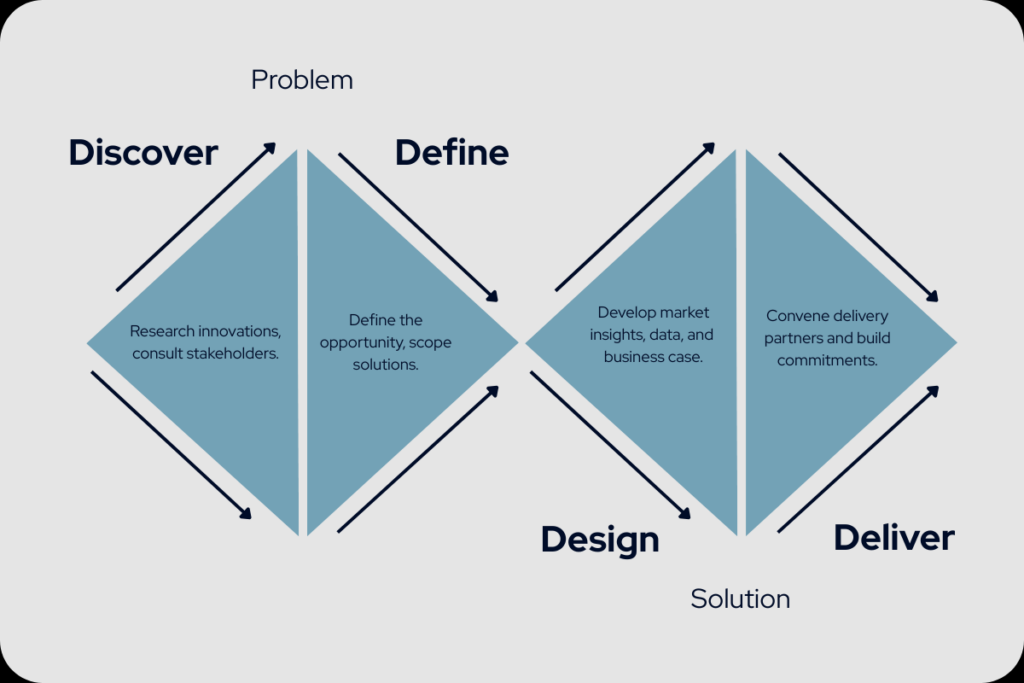
In developing novel financing solutions, we follow a design thinking methodology to identify gaps and opportunities, taking in key learnings from sustainable finance centres in other jurisdictions.

High-level timeframe

Jun 2024

CSF appointed delivery partner by the government to support novel financing solutions in key transition sectors.

Sept 2024

Through research and stakeholder engagement, energy identified as first sector. 

Oct 2024 to Dec 2025

Market engagement to develop  opportunities for accelerated action by the financial sector.

Mar 2026

Establish coalition for energy demonstration project implementation.

Dec 25 – Jun 26

Research and stakeholder engagement to scope nature as next priority sector.

Subscribe

Enter your name and email address to subscribe.

Close

About

Our Work

Current Work

Past Work

News and resources

Resources